
Deckard's Internal Conflict
Do Androids Dream of Electric SheepThe bounty hunter's growing empathy for androids and the moral crisis it creates.
increasing Bearing strength in each event
 decreasing
Bearing strength in each eventdecreasingInitial Detachment

The Professional Attitude
Mood Organ
Deckard dials for a businesslike attitude. He is focused on efficiency. Androids are machines to be retired.
The Electric Sheep
He tends to his electric sheep, a constant reminder of his lack. He wants a real animal, but the job is a means to that end.
The Assignment
He takes Holden's list with no hesitation. The hunt is a job. He does not question it.
Encounter with Luba Luft
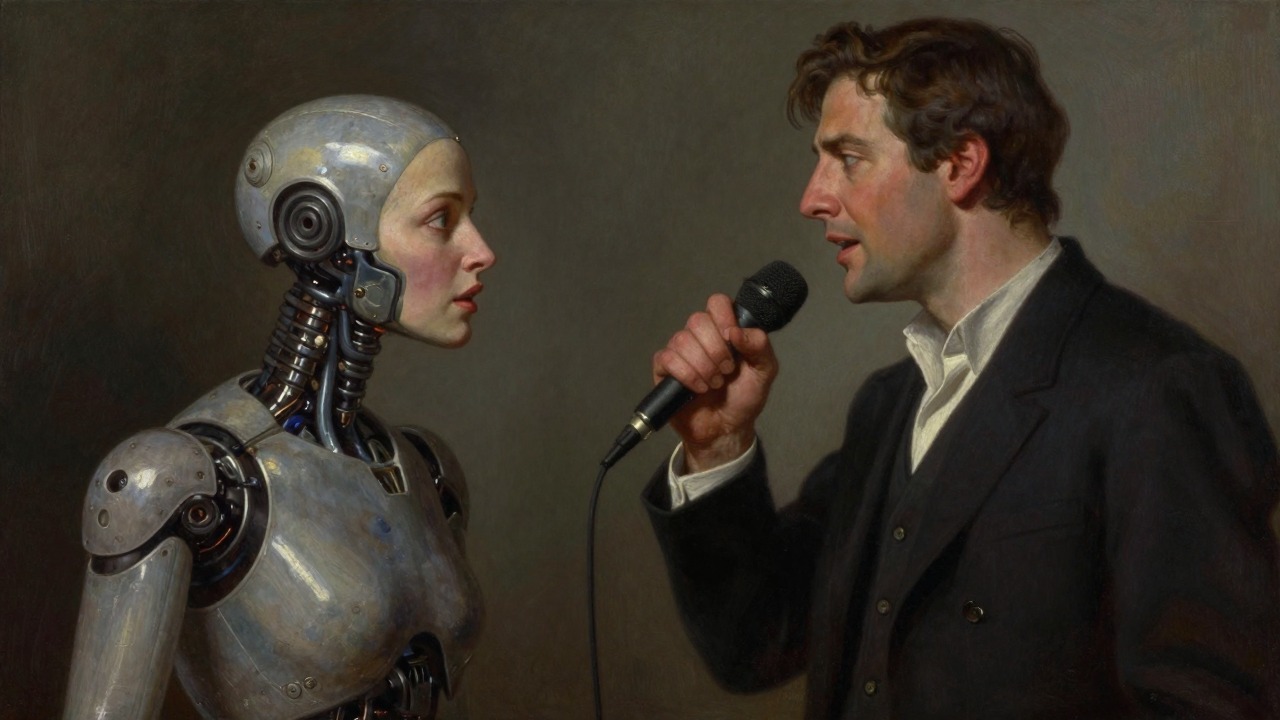
The Singer's Humanity
The Rehearsal
Deckard is moved by Luba's voice. He feels a connection to her art. She is not just a machine.
The Test
She deflects his questions, but he sees her fear. He hesitates. The professional instinct wars with sympathy.
The Killing
When Resch kills her, Deckard is disgusted. He burns the book he bought her. The act feels wrong.
Self-Test

Testing His Own Empathy
The Question
Deckard tests himself with the Voigt-Kampff. He asks about a female android being killed. The needles show a strong empathic response.
The Revelation
He realizes he feels empathy for at least some androids. This shakes his identity. He is not the cold hunter he thought.
Conversation with Resch
Resch tells him it's just sex. Deckard is not convinced. He begins to see the job as a curse.
The Affair with Rachael

Intimacy with an Android
The Hotel Room
Deckard and Rachael make love. He feels closeness and betrayal. She admits her mission is to neutralize him.
The Attempt to Kill
He almost kills her but cannot. He lets her go. The act of empathy is stronger than his duty.
The Aftermath
He knows he has changed. The old Deckard is gone.
Mercer's Guidance
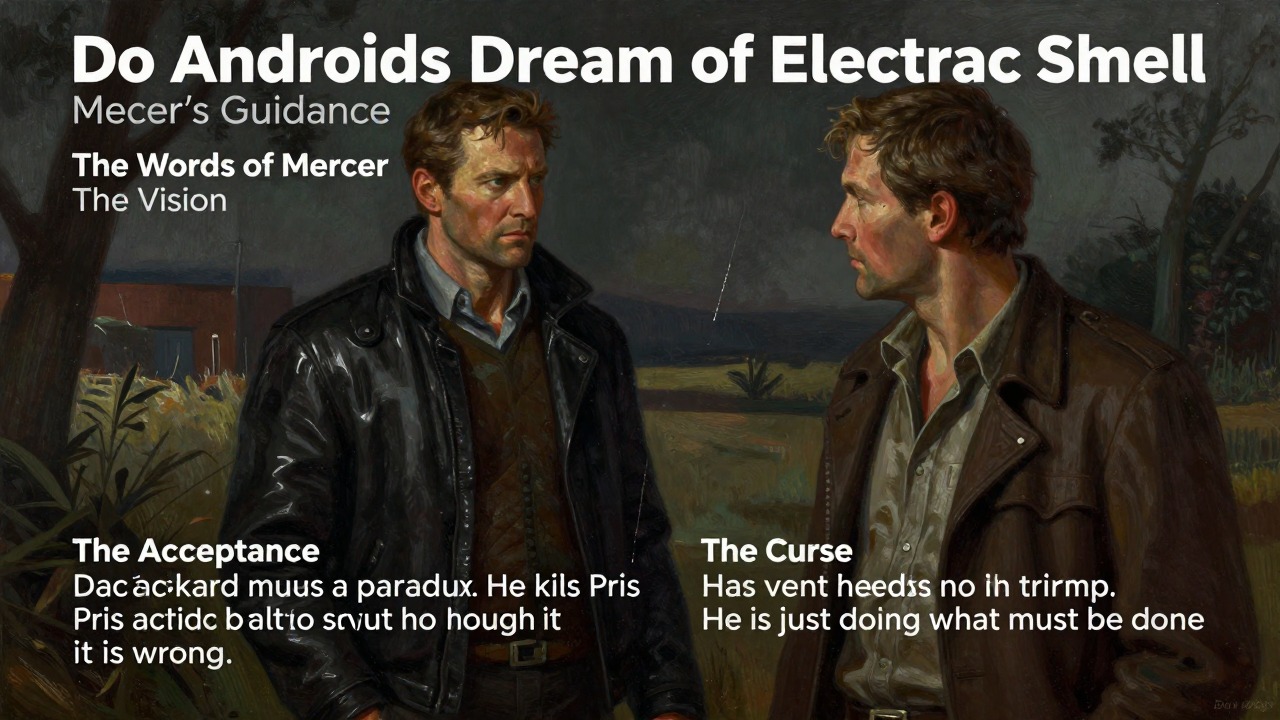
The Words of Mercer
The Vision
During the hunt, Mercer appears to Deckard, warning him about Pris. He says Deckard must do wrong even though it is wrong.
The Acceptance
Deckard accepts the paradox. He kills Pris and the Batys, but he feels no triumph. He is just doing what must be done.
The Curse
He understands the curse: to be required to violate one's own identity. It is the basic condition of life.
The Solitary Climb
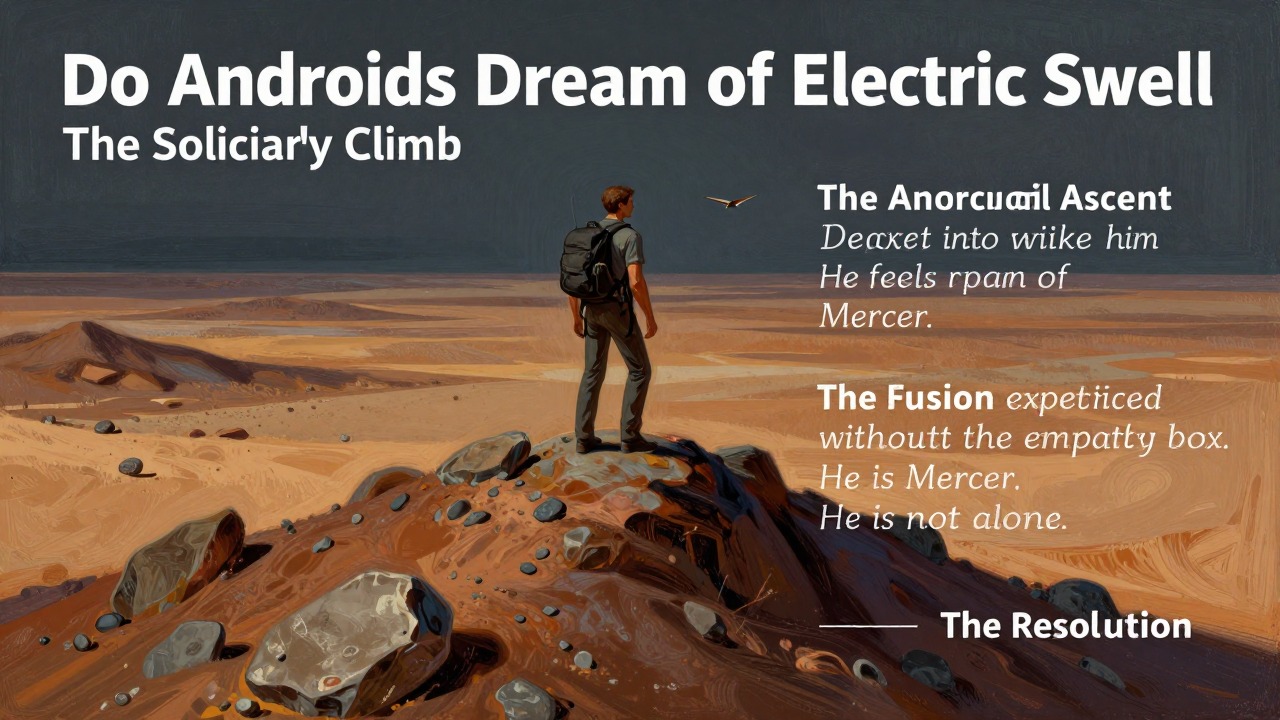
The Personal Ascent
The Desert
Deckard flies into the wasteland. He climbs a hill, alone. Stones strike him. He feels the pain of Mercer.
The Fusion
He experiences the ascent without the empathy box. He is Mercer. He is not alone.
The Resolution
He accepts his role. The conflict is internal, and he has made peace with it.
morning of January 3
late afternoon
night
night
late night
dawn
